
San Luis Obispo · Sauna Builder Services
Infrared Saunas
Full-spectrum and far-infrared rooms built into closets, spare bedrooms and garages, running gentler heat on lighter electrical than a traditional room needs.
Infrared Saunas · San Luis Obispo
Infrared Heat, Built In Properly
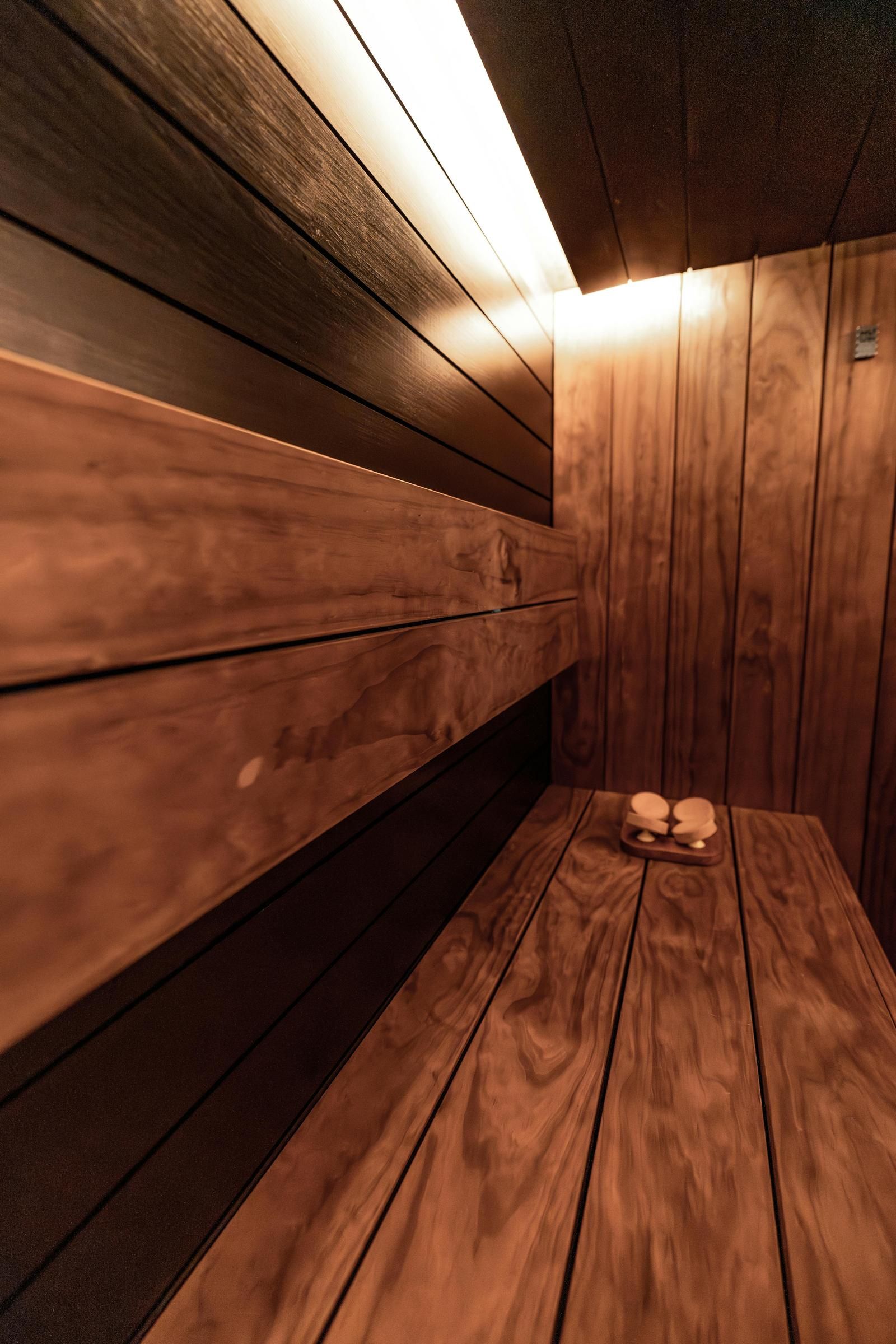
An infrared sauna warms you rather than the air, which is why it runs at 120 to 150 degrees and still leaves you thoroughly cooked. That difference matters practically: heat-up is fifteen minutes instead of forty, most rooms run on a standard 120V or a modest 240V circuit, and the wall build-up is simpler because there is far less moisture to manage. We build infrared rooms into the same closets, spare bedrooms, garage corners and basement nooks we use for any indoor sauna, using full-spectrum or far-infrared emitters set at bench height and back level so the heat reaches you where you sit rather than where the panel happens to point. We also build hybrid saunas that carry both an infrared bank and the heater from a traditional sauna, for households that cannot agree on one.
Why Have Infrared Installed Rather Than Assembled
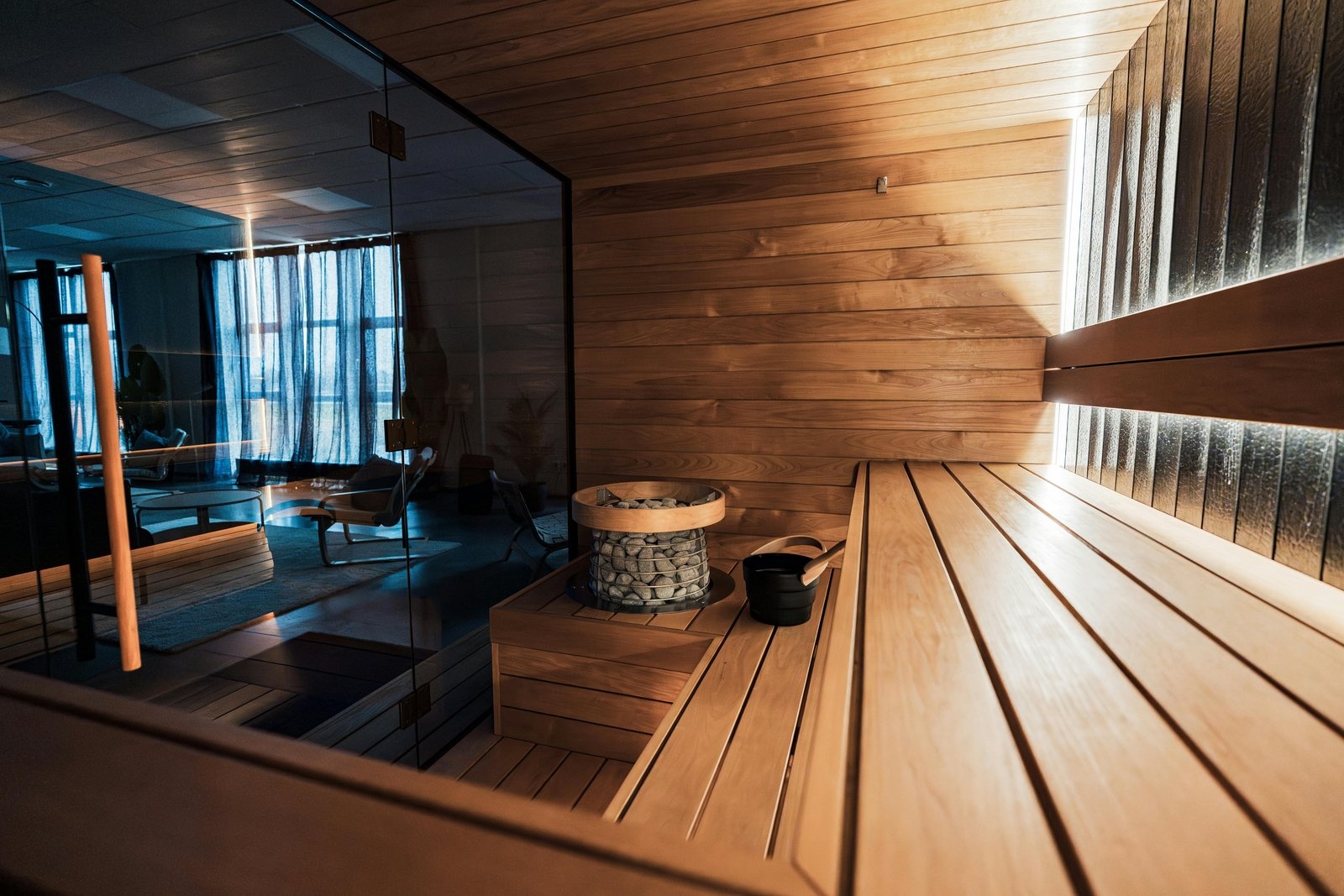
Plenty of infrared cabins arrive flat-packed and get pushed against a wall, which works until you notice the emitters are aimed at your shins, the room shares a circuit with the laundry, or the enclosure is off-square enough that the door will not seal. We build the room instead: framed, insulated, wired on its own circuit and finished in the same wood we use on every job a professional sauna builder ought to sign off on.
- Emitter placement worked out for seated body position, not panel convenience.
- Dedicated circuit sized and installed under permit.
- Untreated hemlock, cedar or basswood interiors with no varnish to off-gas.
- Hybrid builds available: infrared bank plus a traditional heater in one room.
- Low-EMF panels specified as standard.
Reasons to Choose an Infrared Sauna
Reasons clients land on infrared:
The electrical is limited
Where a 60 amp heater circuit is out of reach without a service upgrade, an infrared room often runs on what the house already has. That alone decides it in a lot of older coastal homes.
You want short sessions on a weekday
Fifteen minutes to temperature makes a 6am session realistic. Traditional rooms reward planning; infrared rewards impulse.
High heat is uncomfortable for you
At 130 degrees you can sit for forty minutes and hold a conversation. For people who find a 190 degree Finnish room punishing, this is the version they will actually keep using.
The space is small or shared
Lower surface temperatures mean smaller clearances and simpler moisture handling, so an infrared room fits in a closet or a bedroom corner where a traditional build would not.
You want both kinds of heat
A hybrid room gives you infrared on a weekday morning and a full steam session at the weekend, which is a fair description of how most households actually use a sauna.
If you are weighing infrared against a traditional room, tell us the space and the panel situation and we will lay out both. Call: 805-855-0863
How We Work
From the first drawing to the first steam, one builder runs your project.
1. Space and circuit check
We measure the space, confirm what the panel can carry and work out how many emitters the room needs and where they should sit relative to the bench. Then you get a written spec with the panel type, the circuit and the wood.
2. Framing, wiring and insulation
We frame or prep the enclosure, insulate it, run the dedicated circuit under permit and set the emitter mounts. Infrared rooms carry less moisture load than traditional ones, but they still get a proper wall build-up.
3. Finish and calibration
Paneling, bench, backrest and controls go in, then we run the room up, check emitter coverage from a seated position and set the control defaults with you.
Infrared Options Worth Knowing
The choices that separate one infrared room from another:
Far-infrared vs full-spectrum
Far-infrared panels are the common, cost-effective option and run the gentlest. Full-spectrum adds near and mid wavelengths for a more intense session at the same air temperature, at a higher price per panel.
Panel placement
Back, calf, side and floor positions all do different work. A room with everything on one wall heats one side of you; we spread coverage so a seated body is warmed evenly.
Wood choice
Basswood and hemlock are the usual interiors because they stay pale and mild-smelling at low heat. Cedar is available but its aroma is much stronger at infrared temperatures than most people expect.
Controls and extras
Digital panels with session presets, chromotherapy lighting, heat-rated speakers, oil diffusers and salt walls all fit an infrared room comfortably, since the temperature is friendly to electronics.
Hybrid rooms
An infrared bank on one wall and a traditional electric heater on another, sharing a bench and a vent path. It costs more than either alone and gets used far more often than either alone.
What Affects the Cost of Infrared Saunas
Infrared pricing is driven less by construction and more by the emitters:
- Panel count and type. Full-spectrum panels cost several times what basic far-infrared panels do, and coverage matters more than headline wattage.
- Room size. One or two person cabins are the common build; four person rooms need more panels rather than just more wood.
- Electrical work. Many rooms run on an existing circuit, but a dedicated run and permit is still the right way to do it.
- Interior wood. Basswood and hemlock at the practical end, cedar and thermo-aspen above.
- Extras. Chromotherapy, sound, salt walls and glass fronts each add a step.
Infrared usually lands below a comparable traditional room, mostly because the electrical and the moisture handling are lighter. It also sits well below a tiled steam sauna, where the waterproofing carries much of the cost.
Frequently Asked Questions
How do traditional saunas compare to modern infrared saunas?
One warms the air around you; the other warms you and leaves the air alone. An infrared sauna leaves the air at 120 to 150 and warms your body directly, so sessions feel milder and last longer. Traditional rooms need a heavier circuit, a longer heat-up and careful vapor control. Infrared rooms are quicker to start, easier to fit and cheaper to run. Neither is a substitute for the other, which is why we build hybrid rooms for households that want both.
Does an infrared sauna need a dedicated circuit?
Smaller one or two person cabins often run on a standard 120V circuit, but sharing that circuit with a laundry or a fridge is how people end up tripping a breaker mid-session. Larger and full-spectrum rooms want their own 240V run. We size and install it under permit either way, and we check panel capacity before specifying the room.
Can I put an infrared sauna in a bedroom or a closet?
Yes, and that is where a good share of them go. Surface temperatures stay low enough for modest clearances, and there is little moisture to manage compared with a traditional room. What we do insist on is a properly framed and insulated enclosure with its own circuit rather than a flat-pack cabin pushed against drywall.
How hot does an infrared sauna get?
Typically 120 to 150 degrees at the air, with the sensation of heat coming from the panels rather than the room. Most people sit for thirty to forty-five minutes, considerably longer than a traditional session at 190 degrees.
Is infrared a dry sauna?
Yes. There are no stones and no water, so humidity stays at whatever the room already had. If the steam and the löyly are the part you care about, a traditional or steam room is the build you want, and we will tell you so rather than sell you the easier install.
Planning a sauna on the Central Coast?
Tell us about the space and what you have in mind and we will come back with a drawn concept and a flat-rate quote. Free estimate, no obligation.
Or call us now: 805-855-0863