
San Luis Obispo · Sauna Builder Services
Cedar Tub Install
Western red cedar hot tubs and Japanese-style soaking tubs set on a proper base, heated by wood or electric, with covers, steps and drainage handled.
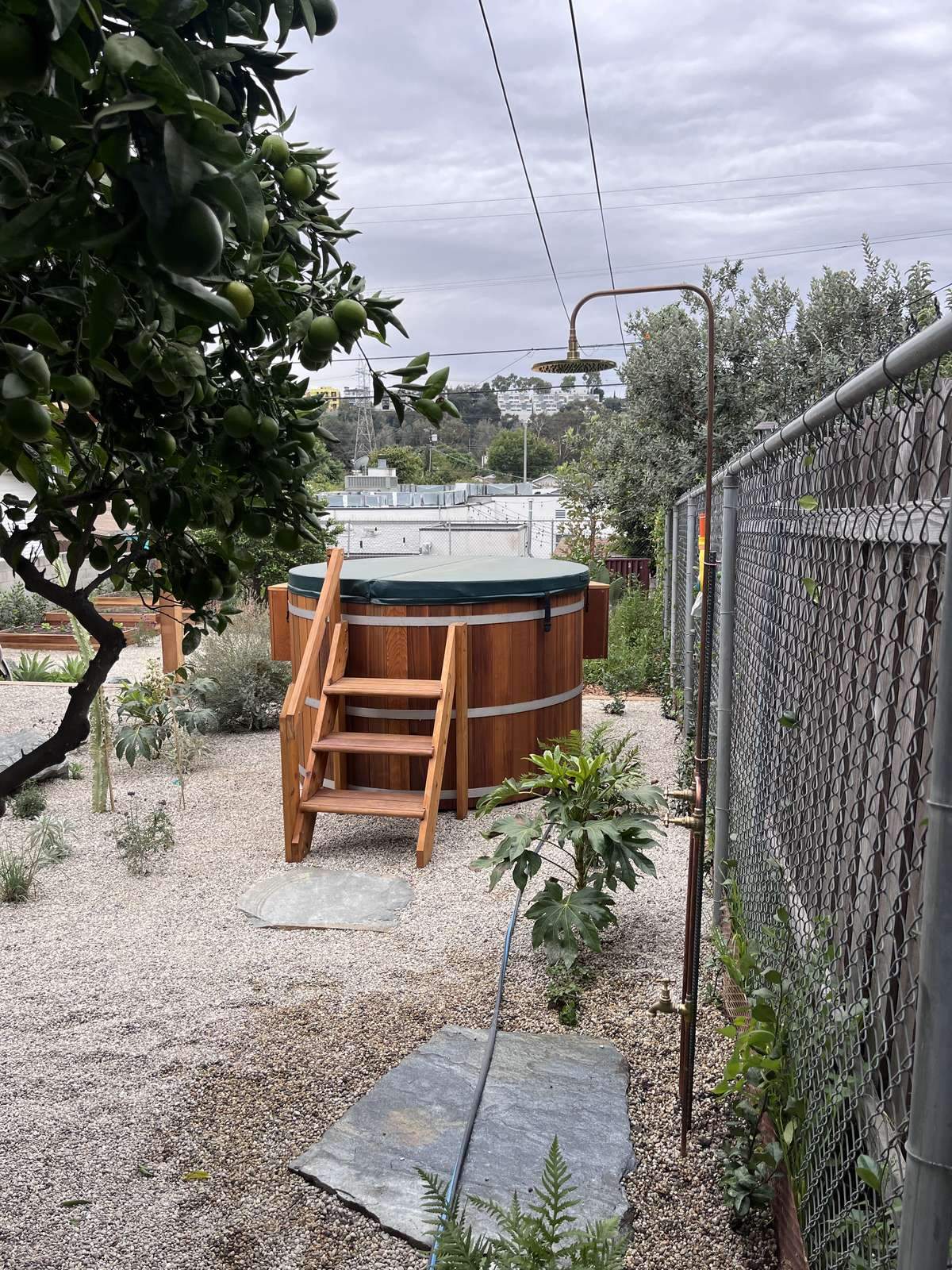
Cedar Tub Install · San Luis Obispo
Cedar Tubs, Set Up To Last
A cedar tub is a different proposition from an acrylic spa. There is no shell, no cabinet full of jets and no glowing waterfall: it is a wooden vessel that holds hot water, smells extraordinary while it does, and looks better every year rather than worse. We install western red cedar hot tubs and Japanese-style ofuro soaking tubs, usually alongside an outdoor sauna, heated by a wood-fired snorkel stove or an electric heater with filtration, and we handle everything around them: the pad or deck framing that carries the weight, the drainage, the electrical, the steps, and a fitted cedar tub cover that actually keeps heat in.
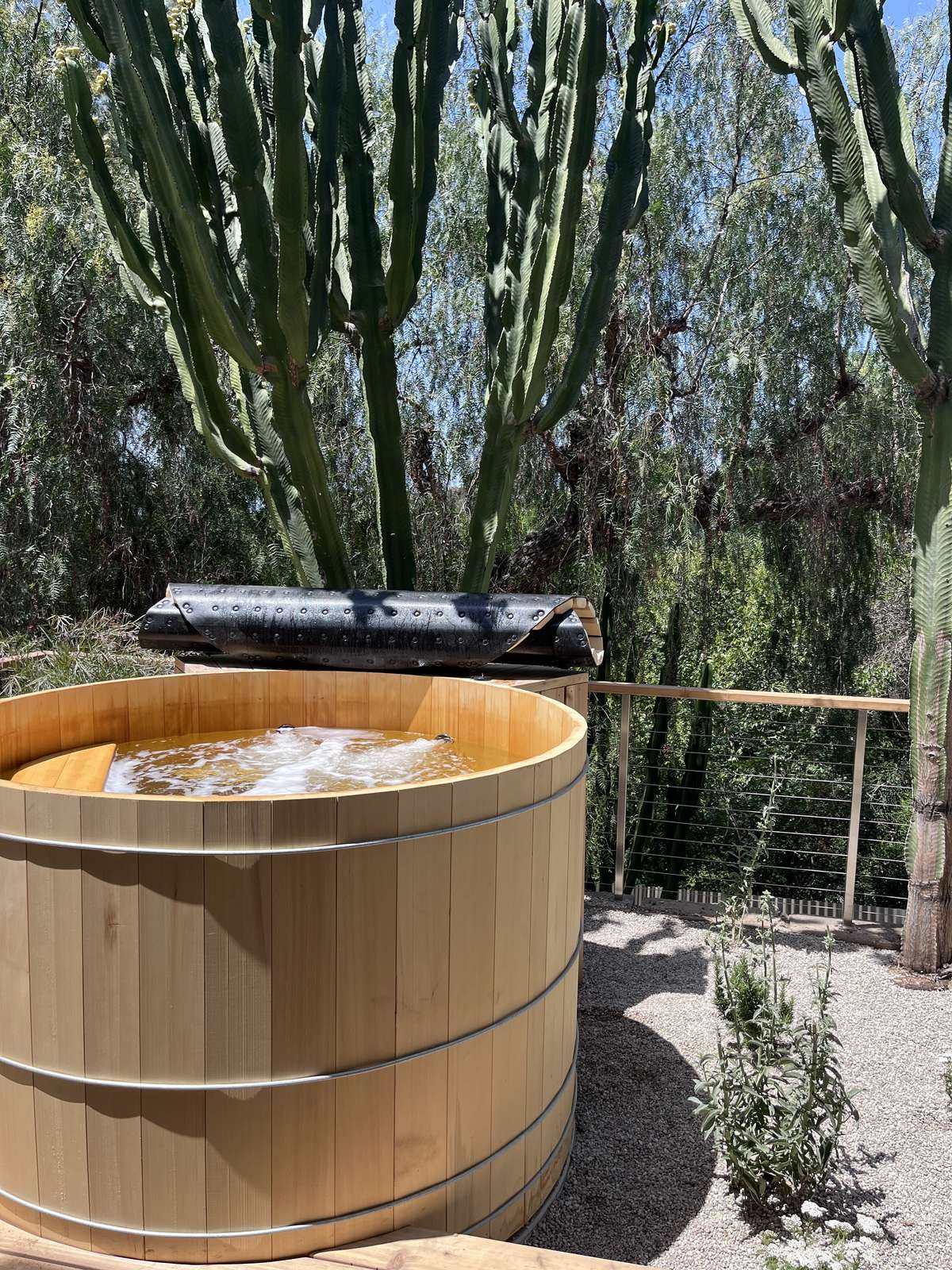
Why the Setup Matters as Much as the Tub
A full cedar tub is heavy, and wood moves. Set on ground that settles, the staves lose their fit and the tub weeps until it is re-tightened. Set without drainage, the base stays wet and the underside is the first thing to go. We build the support and the drainage for the filled weight and for our winters, then set the tub on it, the same groundwork a cold plunge install needs.
- Pads and deck framing engineered for the filled weight.
- Drainage planned before install, not discovered on fill day.
- Wood-fired snorkel stoves or electric heat with filtration.
- Fitted insulated covers, steps and rails.
- Break-in guidance so the staves swell and seal properly.
Reasons to Choose a Cedar Tub
A cedar tub is the right call when:
You want the material, not the machinery
Cedar and hot water, with nothing plastic in the picture. For a lot of clients that is the entire brief, and no acrylic spa satisfies it.
It has to look right in the yard
Under oaks, on a deck or beside one of our custom saunas, a cedar tub reads as part of the landscape. Acrylic spas rarely do, however good the surround.
You are building the hot-cold circuit
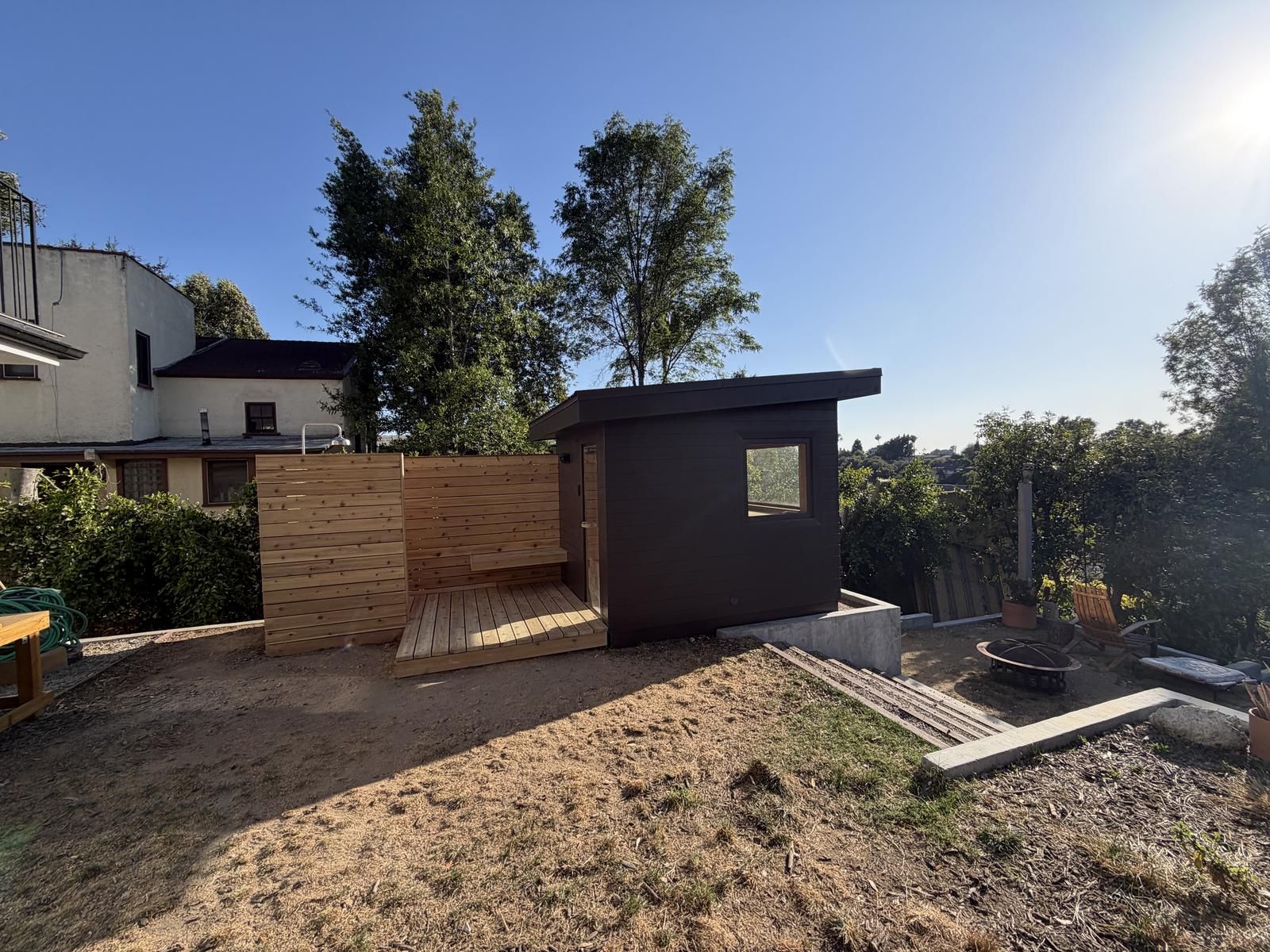
Sauna, cold plunge and a cedar soak make a complete routine, and they share the same deck, drainage and electrical planning.
You like the Japanese soaking format
Ofuro tubs are deeper and smaller, sat in upright to the shoulders, and they suit tight spaces and small households better than a six-seat spa.
You want wood-fired heat
A snorkel stove will bring a tub to temperature without any electricity at all, which is genuinely useful on rural properties around Templeton, Nipomo and Arroyo Grande.
Tell us where you would put it and we will work out the base, the drainage and the heat. Call: 805-855-0863
How We Work
From the first drawing to the first steam, one builder runs your project.
1. Siting and structure
We check the ground or the deck framing against the filled weight, plan drainage and access, and build or reinforce the base. On decks this often means additional joists or posts, which is cheaper to do now than after the tub is on it.
2. Delivery, assembly and heat
The tub is assembled or set, the heater fitted, and the electrical or the flue installed under permit. Filtration and circulation are plumbed on electric setups.
3. Break-in and handover
Cedar staves swell to seal, so the first fill is a process rather than an event. We walk you through it, set the water chemistry routine and fit the cover and steps.
Cedar Tub Options
The choices that come up during planning:
Round tubs vs Japanese ofuro
Round western red cedar tubs seat four to six comfortably. Ofuro-style tubs are deeper, smaller and designed for one or two people sitting upright. Different rituals, different footprints.
Wood-fired vs electric
Snorkel stoves heat fast, need no power and ask you to tend a fire. Electric heaters with filtration hold temperature continuously and are the practical choice if you want to soak on impulse.
Cedar tub covers
An insulated fitted cover is the difference between holding temperature overnight and reheating from cold. It also keeps leaves and rain out, which on an oak lot matters more than people expect.
Steps, decking and rails
Getting in and out safely at 104 degrees in the dark is a design problem. We build steps, rails and surrounding decking as part of the install.
Water care
Wood tubs are managed differently from acrylic spas: gentler chemistry, more frequent changes on wood-fired setups, and a filtration routine on electric ones. We set it up and explain it.
What Affects the Cost of Cedar Tub Install
Cedar tub pricing depends on the tub and on what has to be built to receive it:
- Tub size and style. Round cedar tubs, ofuro soakers and larger family sizes all price differently.
- Heat source. Wood-fired snorkel stoves versus electric heaters with filtration and circulation.
- Base or deck work. A pad on firm ground is modest; reinforcing an existing deck for filled weight is more.
- Electrical and plumbing. Circuit run, filtration plumbing and drainage routing.
- Extras. Cover, steps, rails, surrounding decking and lighting.
We quote the tub and everything around it as one number, since the base and the drainage are what make it last, and we price it beside anything else you are taking from our sauna and spa work.
Frequently Asked Questions
How is a cedar tub different from a regular hot tub?
A cedar tub is a wooden vessel rather than a molded acrylic shell in a cabinet. It holds heat well, smells like cedar every time you use it, and ages into something that looks better with time. There are no jets in the usual sense, water care is gentler, and the staves need to stay swollen, which means a tub that sits empty for months needs a break-in again. People choose them for the material and the look, not for the massage.
Does a cedar tub need a concrete pad?
It needs a level base rated for the filled weight, which is substantial. On firm flat ground a pad is the straightforward answer. On a deck we usually add joists or posts. On sandy soil around Los Osos or the Nipomo Mesa we use piers sized properly, because settling is what pulls a tub out of round.
Wood-fired or electric heating?
Wood-fired snorkel stoves heat quickly, need no electricity and suit rural properties, but somebody has to tend the fire and plan an hour ahead. Electric heaters with filtration hold temperature continuously, which makes a spontaneous soak possible and costs more to run. Plenty of clients on larger inland lots go wood-fired; most in-town installs go electric.
How much maintenance does a cedar tub need?
More attention than an acrylic spa and less than people fear. Keep it filled so the staves stay swollen, use gentler chemistry, keep the cover on, and rinse and refill on the schedule we set out for your setup. Wood-fired tubs are typically drained and refilled more often than filtered electric ones.
Can you install a cedar tub next to a sauna?
It is the pairing we most often build. Doing both at once means one set of drainage, one electrical plan and one deck, which is significantly cheaper than adding the second a year later. Add a cold plunge and you have the full circuit.
Planning a sauna on the Central Coast?
Tell us about the space and what you have in mind and we will come back with a drawn concept and a flat-rate quote. Free estimate, no obligation.
Or call us now: 805-855-0863